- Relationship between the song and the visuals
- Narrative and performance of the song
- Technical aspect of the music video
- Star image from the protagonist (celebrity musician) with a lot of shots of the musician to make them the centre of attention
- Thought through beat (seeing what the lyrics mean in the audience's head - this is the first step)
Thought through Beat
This is the first step, in which the music structure is analysed, allowing an understanding of the verses and chorus to be made. Second, the voice of the song must be analysed. The artists' voice can be incredibly unique, providing a sense of identification for the artist or allowing a trademark sound, linking into their star image. Thirdly, Goodwin notes the artists' mode of address. Songs can be perceived as stories and the artist is the storyteller. An example of this is Babooshka by Kate Bush, as attached below:
Though the music video doesn't follow the narrative of the song, the song is still telling a story.
Star Image
This is when the artist has a significant look that can be seen in many different types of their media whatever it is. It is a vital aspect to music videos as it allows people to associate different traits to certain artists. Meta narrative displays the artist's development over time and plays an important part in the music video production process.
Examples are:

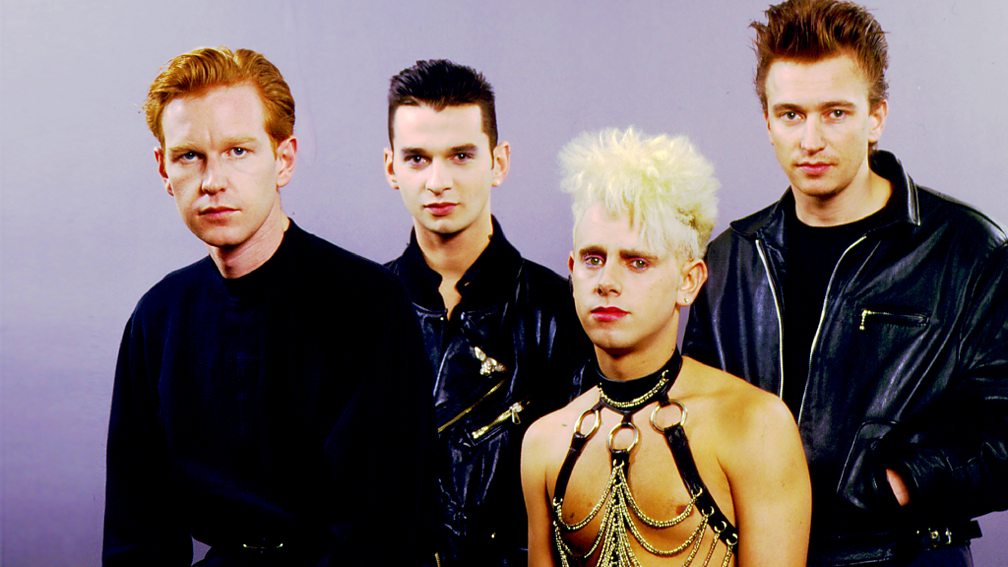
Above - Depeche Mode (1990) and in 1988. Leather and 'bondage' fashion is significant of the band and black leather was something that fans were able to associate with the band and even followed the style themselves, as seen in the film 101.

This further highlights the importance of star image and fan interaction.
Narrative & Performance
Songs don't provide a complete narrative. Songs only provide parts of the meaning of the song and we make up our own opinions of the meanings we associate to the songs. Goodwin states that music videos should ignore common narrative, as it is important in their role of advertising to do so. Music videos should have coherent repeatability. Narrative and performance work hand in hand, making it easier for the audience to watch over and over without losing interest. At least, for a passive audience anyway. The artist acting as both narrator and participant of the music video helps to increase the authenticity of the video. However, lip syncing and other mimed actions to follow the song much remains the main common convention of music videos.
Technical Aspects
These are shot types, camera angles, mise-en-scene, editing and other special effects.
Music videos often have editing that follows the beat/pace of the song, close-ups and quick editing cuts for dance sequences or close-up shots for music videos that have sexual themes. Linking into star image, lots of close-ups of the artist's faces are used to allow the audience to identify with their favourite artist. Mise-en-scene can also link into star image because the artist may be wearing clothes of their trademark style. Mise-en-scene also needs to look professional and of a high quality.
Relationship between the Song and the Visuals
There are 3 ways in which music videos work to promote a song:
-Illustrate
Music videos can use a unique set of images to illustrate the meaning of the lyrics and genre.
-Amplify
This is similar to repeatability. Meanings and effects are manipulated, being constantly shown throughout the video and drummed into the audience's vision.
-Disjuncture
This is when the meaning of the song is completely ignored and a visual that is irrelevant to the song is used.
Bibliography
Goodwin, A. (1993). Dancing in the distraction factory. London: Routledge.
This is the first step, in which the music structure is analysed, allowing an understanding of the verses and chorus to be made. Second, the voice of the song must be analysed. The artists' voice can be incredibly unique, providing a sense of identification for the artist or allowing a trademark sound, linking into their star image. Thirdly, Goodwin notes the artists' mode of address. Songs can be perceived as stories and the artist is the storyteller. An example of this is Babooshka by Kate Bush, as attached below:
Star Image
This is when the artist has a significant look that can be seen in many different types of their media whatever it is. It is a vital aspect to music videos as it allows people to associate different traits to certain artists. Meta narrative displays the artist's development over time and plays an important part in the music video production process.
Examples are:
Above - Depeche Mode (1990) and in 1988. Leather and 'bondage' fashion is significant of the band and black leather was something that fans were able to associate with the band and even followed the style themselves, as seen in the film 101.
This further highlights the importance of star image and fan interaction.
Narrative & Performance
Songs don't provide a complete narrative. Songs only provide parts of the meaning of the song and we make up our own opinions of the meanings we associate to the songs. Goodwin states that music videos should ignore common narrative, as it is important in their role of advertising to do so. Music videos should have coherent repeatability. Narrative and performance work hand in hand, making it easier for the audience to watch over and over without losing interest. At least, for a passive audience anyway. The artist acting as both narrator and participant of the music video helps to increase the authenticity of the video. However, lip syncing and other mimed actions to follow the song much remains the main common convention of music videos.
Technical Aspects
These are shot types, camera angles, mise-en-scene, editing and other special effects.
Music videos often have editing that follows the beat/pace of the song, close-ups and quick editing cuts for dance sequences or close-up shots for music videos that have sexual themes. Linking into star image, lots of close-ups of the artist's faces are used to allow the audience to identify with their favourite artist. Mise-en-scene can also link into star image because the artist may be wearing clothes of their trademark style. Mise-en-scene also needs to look professional and of a high quality.
Relationship between the Song and the Visuals
There are 3 ways in which music videos work to promote a song:
-Illustrate
Music videos can use a unique set of images to illustrate the meaning of the lyrics and genre.
-Amplify
This is similar to repeatability. Meanings and effects are manipulated, being constantly shown throughout the video and drummed into the audience's vision.
-Disjuncture
This is when the meaning of the song is completely ignored and a visual that is irrelevant to the song is used.
Bibliography
Goodwin, A. (1993). Dancing in the distraction factory. London: Routledge.

No comments:
Post a Comment